Showing posts with label Books. Show all posts

Tuesday, July 19, 2016

Book Club: Before The Fall


Noah Hawley is most famous at this point for creating FX's TV show Fargo and while I enjoy the show and loved the first season a lot, there's nothing about the show that got me extra excited for its head writer's latest novel. But since it was on sale on Kindle, I thought why not.

Before The Fall explores the pasts and present of a private plane crash's passengers and survivors. It's told mostly from the point of view of the one adult survivor except when it explains life occurrences and backstories for the other passengers on the plane. We, as the reader, along with the survivors and the general public in the story don't know how or why the plane crashed, and I liked that. I thought it was a story of these seven passengers, their pasts, their flaws, what made them unique, what led them to this flight, how they knew each other (not in a Lost coincidence way, just how they'd met, etc.). It does a fine job of doing that. They are interesting enough characters, and you obviously feel for the child who survived and lost his family. I couldn't help but roll my eyes at some of the descriptions of the women characters' thoughts and behaviors, but what are you gonna do?

About 70% of the way through, you see the storylines converging, the FBI investigation, the Bill O'Reilly-type news host getting more and more screen-time (the book equivalent?). And then in the final pages you find what caused the crash. The reason is so dumb, so insensible that while you're given 300-something pages of this world that was constructed, you kind of regret reading it in the first place. To only explain the flight attendant and the co-pilot's chapters at the very end and then to show that the crash was caused by a SPOILER crazy co-pilot mad that a woman dissed him SPOILER is one of the dumber things I've read. Whether that's a comment on how random and ridiculous these events can sometimes be or on how crazy men can be doesn't matter because the book just ends with it. If it continued, I imagine that the same Bill O'Reilly-type would (after retracting his terrorism assumptions) sympathize for the still-drunk co-pilot who was sad that the woman he used to date didn't want to see him anymore.

Sunday, April 3, 2016

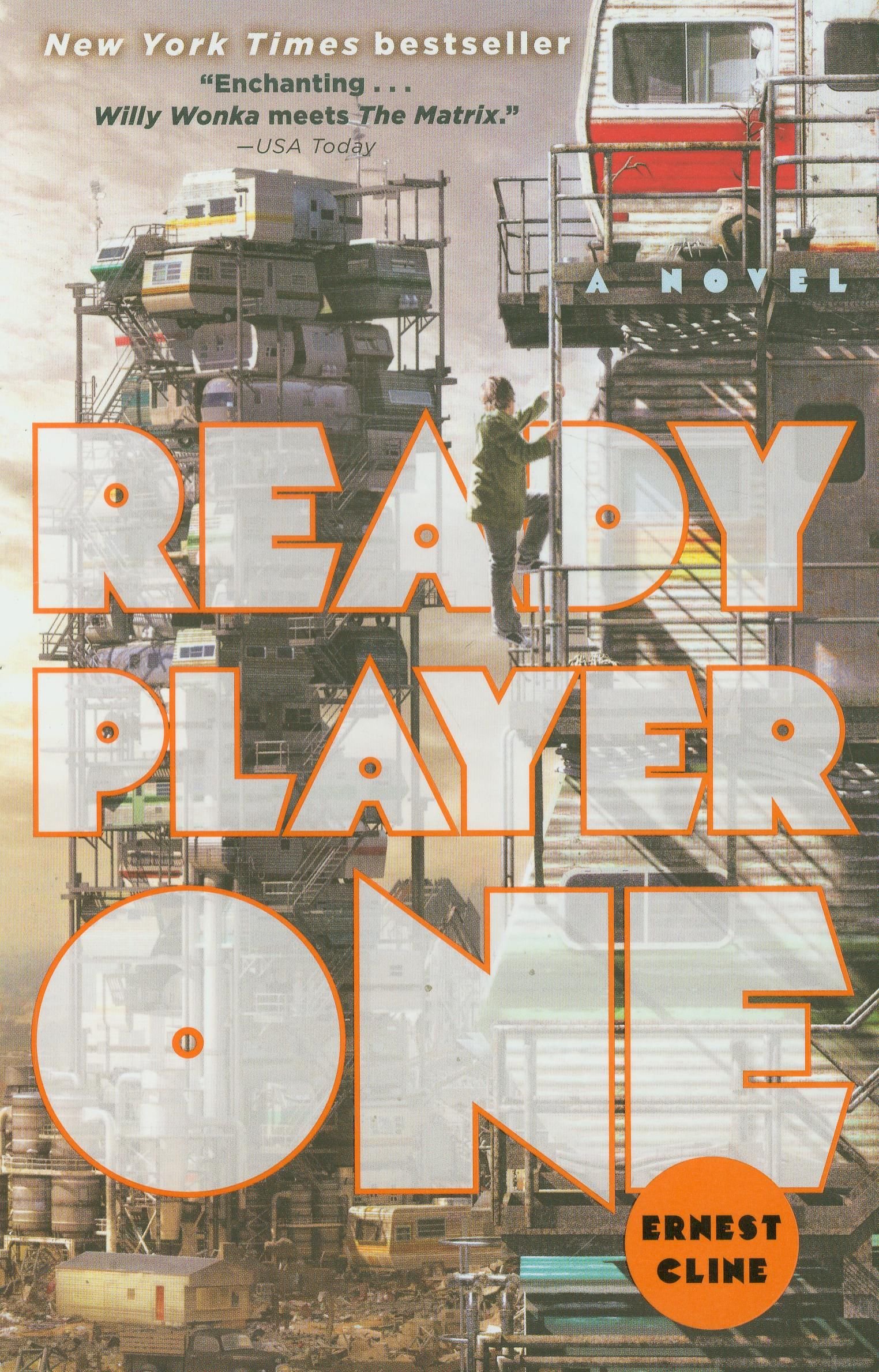
Book Club: Ready Player One


The basic premise of Ernest Cline's Ready Player One is that of a great modern sci-fi story. In a post not quite apocalyptic but somehow affected by climate change world, the most popular pastime is a virtual reality video game accessible to all people. The game's creator, billionaire James Halliday, dies and leaves his fortune hidden somewhere within the game. Whoever finds the treasure gets the money. As an elevator pitch, it's tremendously effective. It makes all the sense in the world that Steven Spielberg is directing the film adaptation. Typically this type of treatment happens with worthwhile stories. Ready Player One stops being one worth reading after the tenth page.

There's plenty to be frustrated about in the novel. The dialogue, the character interactions, the lack of character development, the unimaginative story arc, the insensitivity to race. Let's start with the 80s references. Before Halliday passes, he publishes an almanac of all his interests, potentially with clues to the location of the keys that lead to the treasure. What is supposed to be a collection of personal interests is actually a summary of anything and everything culturally relevant during the 1980s. Here's what Cline gets completely wrong about how pop culture works. While it's not uncommon for a person to have interests across several mediums, it's close to impossible for someone to profess a love for an array of video games as accessible as Pac-Man and Donkey Kong and as obscure as text-based adventure games, coupled with obsessions with Ferris Bueller's Day Off and The Breakfast Club and then a craze for the band Rush. There are people that admit to liking everything, but someone, let alone a video game designer egotistical enough to publish a book of all the shit he likes, would never like everything. All the name drops of 80s phenomenon are cheap pulls for nostalgia for, one would assume, 40+ year olds looking for young adult science fiction? If anything, it makes the film production that much more difficult and expensive, given all the clearances.

The obsession with the hunt and as a result the almanac results in the modern world becoming entirely obsessed specifically with 80s movies, music and TV. Again, that's not how pop culture works. There's a point in which Wade, the protagonist, bemoans the modern era corny sitcom that's constantly on TV and then chooses to binge Family Ties, a real television show. But how can you expect the writer to understand any of this when an actual sentence in this book describing Halliday's favorite directors goes, "Spielberg, Lucas, Tarantino...and, of course, Kevin Smith." Cline also wrote the movie Fanboys. Do with that information what you will.

There are three keys that lead to three gates, the last of which guards the treasure. It's a pretty standard storytelling structure. Whenever the players are stuck solving answers to clues that lead to the next key, however, there's no callback to something previously established or reference to lore established within the universe. Every single time, Wade simply remembers some video game that had never been mentioned previously or some other random trivia from the almanac and that's it, he solves the riddle. Every time.

If you're trying to do a Hunger Games and put together a story that doesn't really make that much sense but has characters you can root for simply based on the fact that they're trying to win a contest and beat a villain – a corporation that wants to monetize the (currently free) video game, then fine I get it. It gets the job done. I don't totally fault you for ignoring some of the more interesting possible themes given the premises: the future of technology and virtual reality, consequences of lack of human contact, love in a virtual world, racism in virtual reality, class issues in the real world. Why bother with those topics when the dialogue reads like it was written by a child, or someone that never attended a school, or spoke to a member of the opposite sex as a teenager, or participated in any sort of competition? Why even touch on how pop culture permeates in a world in which so many choose to exist in a virtual setting when a scene describes Wade downloading a how-to-dance tutorial for his avatar so the avatar can appear to be moving to the music correctly and this is viewed by others as something that is cool to do. Fuck this book.

Friday, July 24, 2015

Book Club: The Martian, No Country for Black Men


The Martian by Andy Weir
The teaser or not-quite-theatrical trailer or whatever two minute clip Fox released for the upcoming movie The Martian some months back did absolutely nothing for me. Even with Ridley Scott's name attached — you saw Prometheus — I found it strange that a huge budget studio film set in space was coming out so close to the release of Interstellar, another big space movie, let alone one that also starred Matt Damon (spoiler..). Now that I think about it, if you include Gravity, space movies have had quite the run these last few years. Anyway this trailer did nothing for me. He gets stuck. They save him. So what? Also, Donald Glover? I like Matt Damon, but he's had some misses recently. I disregarded it until someone at work mentioned reading the book and I read about the unbelievable response to the book online. This book is absolutely thrilling. While I do read a lot, I admittedly don't read much modern fiction. Astronaut Watney is accidentally left behind on Mars when his crew thinks he's dead. He has to survive. It's hard to survive in space. Things go wrong. When things start to go right, they go wrong again. And then they go wrong again. Even when you know things are going to go wrong, they go right and then go wrong in a way you could not have imagined. The science of it was fun for me (and apparently accurate at least to an extent). I do recommend this very much.
I just re-watched the trailer and am a lot more excited at least until I realized Venkat Kapoor, the head of NASA in the book, turned into fucking Jeff Daniels on the screen. Jeff fucking Daniels are you kidding me? An Indian dude was finally going to major part in a movie and it went to this clown.

No Country for Black Men by Byron Crawford
I've read all Byron Crawford's books. His blog is in my RSS reader. I subscribe to his weekly newsletter. If you're familiar with his writing, you can guess how this book reads. The books' titles would suggest that they have themes, but they're all anthologies of sorts, with chapters that document different current (and not so current) events that may or may not have to do with their titles, not unlike some of his long form blog posts. There were maybe three chapters about how Nas had in fact lost in Nas Lost if I remember correctly, but that could be total BS. No Country for Black Men follows suit of the other four (wow), but I really enjoyed certain parts of this book. It would be weird to say he has improved while writing these books because he's been writing for so long, but he definitely hit a stride writing certain chapters of this one.

Sunday, November 2, 2014

Book Club: Nick Offerman's "Paddle Your Own Canoe"


Like many, I am an avid Parks & Recreation fan. So of course I love Ron Swanson. I've been reading a lot of biographies lately, especially in the comedy realm, so "Paddle Your Own Canoe" wasn't necessarily something I wanted to jump to. There were works of fiction that probably had higher priority on my list. But then I saw Nick Offerman promote the book on a re-run of Fallon and I saw him perform on Comedy Central's Meltdown show and just thought, "Why not?"

This book is Offerman's biography. It's not a Ron Swanson instructional manual. And while it's hard to believe, Offerman and Swanson are two different people. I love hearing about how people in the entertainment industry grew up and what pushed them into it. As someone who grew up in the suburbs of California, reading about Offerman's country Illinois upbringing was pretty interesting. He was an actor first and a serious one at that. He started off in the theatre. This isn't a world I'm all that familiar with and one that I wish I supported more. It's nice hearing about how he met his wife Megan Mullally.

He of course talks about interest in woodwork and physical activity and shit that I have no knowledge about. He suggests every human be able to, you know, build a chair or whatever, and I was almost inspired to do so for like a full 15 minutes or so. There's also plenty of parts of the book in which he speaks against intolerance, separation of church and state, a good diet and other such topics. It comes off a little preachy at first until you realize many people probably misconstrue the Ron Swanson character as very "America, fuck yeah!" and that both the character and the man behind the character must dispel that illusion.

Sunday, September 28, 2014

Book Club: Matthew Berry & Prodigy


Book Club (September 2014)

Fantasy Life: The Outrageous, Uplifting, and Heartbreaking World of Fantasy Sports from the Guy Who's Lived It by Matthew Berry
I absolutely love fantasy football. Love it. I can't get enough of it. Ever since I started playing when I was 14 years old, I've truly enjoyed playing the game and being a part of a group of people that understood how great it was. At that point, there were all sorts of online options but Fantasy Football has undeniably exploded over the last nine years in terms of impact and popularity, and so much of that explosion can be attributed to Matthew Berry.
I don't remember what year I first saw Berry on TV, but it was on one of ESPN's flagship shows like Sportscenter or NFL Countdown. All I could think was, "Are you serious? A full time fantasy analyst? Is this really necessary? Like, that's his actual job?" I don't know where it came from, but I remember not really liking the guy. Not for any particular reason, and I was maybe too young to realize he was doing I'd love to do for a living. But, yeah, wasn't crazy about the guy. I never started paying to play Fantasy until my senior year of high school, but regardless, I was always very confident in my own opinions regarding my team. So, aside from weekly rankings, I didn't really read any columns from fantasy analysts.
Then I randomly read the column in which Berry talked about his past as TV writer, specifically for Married with Children. I was blown away at that. I had no idea. It's strange for me to not realize he could have had a life before his latest job, but TV writing is something I've always wanted to do. And, you know, generally it's pretty cool. I had a whole new outlook on Berry and was really excited to dive into his book.
He really has lived an interesting life. He wrote for TV, sold a couple movie scripts and finagled fantasy's presence into online print, radio and eventually primetime television. But it's more than that. There's his childhood and how after moving to several cities, it was difficult for him to fit in. There's his want to make fantasy sports bigger and the constant rejection. There's also a very touching chapter on his personal experience with bullying in the context of the Richie Incognito situation. It's stuff anyone can relate to.
Then of course, there's the fantasy aspect. The book is filled with fan's stories of crazy fantasy scenarios, unlikely draft parties, embarrassing loser stories and even ones involving cheating, death, firings and divorce. The stories get to be a bit much, but they're necessary. Because as much as it seems so ridiculous and unnecessary to those that don't play, it is special for all of us that do. (I remember when I discovered an early posting of the pilot episode of The League on Hulu before I even realized it was a real TV show on FX. Was this show made just for me?)

My Infamous Life by Prodigy (of Mobb Deep)
I'm a couple years late in reading this. I'm honestly a little young to really, really be a Mobb Deep fan. Such a big deal was made of the stories in this book in Breakfast Club interviews and the like that I really had to check it out.
The whole book is written like a series of journal entries. They're more or less in order, but not really once you get further in the book. For such a prolific rapper, it's unfortunate that the quality of the writing here is so subpar. Prodigy's family history is truly unbelievable. All the Queens street stories are remarkable, especially for someone like me that grew up in nice suburbs. Those dudes were wild. What's funny is that the N.O.R.E./Capone stories that got brought up so many times in the Breakfast Club are literally maybe two sentences in this book.
There isn't a single event that jumps out that makes the book worthy of reading, but there's a lot included that I'm glad I got to catch up on. Reasons for going label to label, meeting Alchemist, what it was like to be a successful musician in the 90s, the situation with Jay-Z, joining G-Unit, why he ended up going to prison.
There's an interesting story about 50 Cent calling a meeting to reprimand and essentially disband G-Unit as we knew it in 2006. Prodigy also talks about his dealings with members of the Supreme Team, and I had no idea that's where the 50 and Ja Rule Beef stems from. He obviously talks about dealing with sickle cell and how he keeps healthy. There's his issues with religion, conspiracy theories and the time he witnessed a UFO. There's also cool tidbits like how "I Love You Baby" was actually a Havoc beat that he accidentally left in Puff's studio.

Saturday, April 19, 2014

Book Club: Crime and Punishment, Tim Cowlishaw + Tina Fey

Book Club (May/April 2014)

Crime and Punishment by Fyodor Dostoevsky
Obviously this is considered one of the greatest pieces of literature in human history, but I just wish it was a little bit shorter. Technically, I think I had the unabridged version and the print was tiny and very close together, but 500 pages is a lot of reading. I will probably read this again down the line because it deserves re-reading and I'm sure there's a bunch of stuff I missed out on. I don't think the book was perfect (and what I do know, right?). Some of the dialogue tends be way too verbose, but when Dostoevsky gets it right, it can be downright chilling.

Drunk On Sports by Tim Cowlishaw
I love Around the Horn on ESPN. It's one of the few shows I still enjoy on any ESPN network. I don't really have a group of favorite analysts from the show, but I always enjoy when Tim Cowlishaw is on. This show in particular includes glimpses of the analysts' true personalities, but just because you watch someone on TV doesn't meant you actually know anything about his or her personal life. Drunk On Sports isn't a memoir so much as it is a story about an alcoholic who didn't realize he was an alcoholic, continued to be an alcoholic and finally decided not to be an alcoholic. It's not a self-help book, as he iterates on multiple occasions because he never found those helpful for his own problems. His actual sports reporting stories are great – all the stuff with Jimmy Johnson and the Cowboys, stories about actually working for a local paper and its transitions throughout the years. But there's a lot to take from his story about how to approach, deal with and, really, diagnose an alcoholic, especially one whose life isn't necessarily in shambles.

Bossypants by Tina Fey
I like Tina Fey. I wasn't super into SNL, but I was a huge 30 Rock fan. I knew there were mixed reviews about this book, but I wanted to read it anyway. I read Mindy Kaling's book a couple years ago and really enjoyed it, and I just assumed I would feel the same way about this. It starts off pretty weird. It's a memoir, but she tends to intentionally keep so many details to herself, and her childhood really isn't all that interesting. But it takes a turn for the better when she starts telling stories about her time at SNL and later on 30 Rock. The first third of the book had me thinking Fey's humor didn't translate well to 15-page chapters, but by the time she gets to the NBC years, there are moments I literally laughed out loud. She also opens up about being a woman in the industry and being a mother and whether having more kids will affect her career, and I definitely appreciated this as well. As much as it's obvious women don't get proper respect within the comedy/sitcom world, it's nice to hear specifics from someone who works both in front of the camera and behind the scenes.